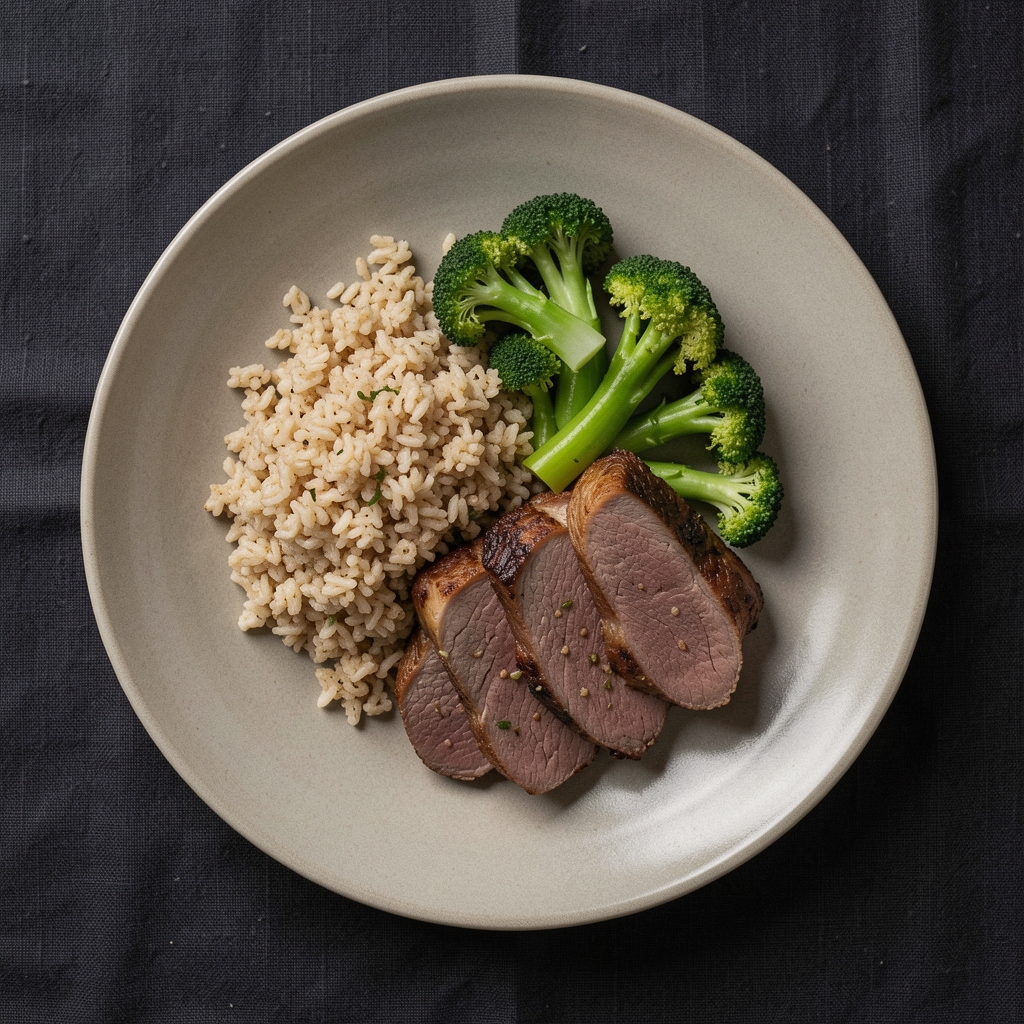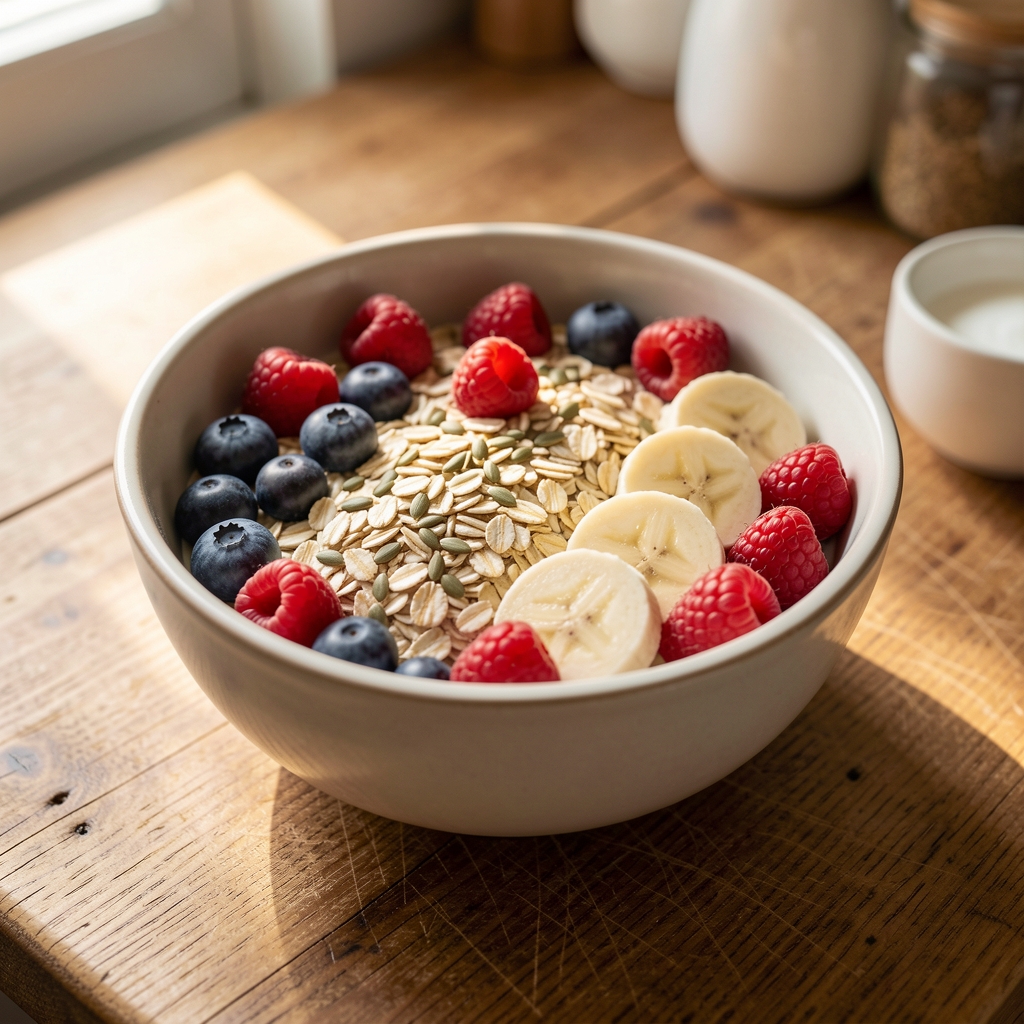
There is a quiet logic to the way a plate built around seasonal produce organises itself — the proportions follow availability, and availability follows the calendar. This is not a recent nutritional insight. It is, in practice, the structure most people observed before the year-round supply chain made every vegetable equally present regardless of month.
What Seasonal Selection Actually Means at the Market
Walking through a well-stocked farmers' market in February looks different from the same market in August. Root vegetables, brassicas, and squashes hold the centre tables in winter. Tomatoes, courgettes, and fresh herbs occupy those same tables when the temperature shifts. The produce changes not because growers are following a trend but because these are the crops that ripen in those conditions.
For everyday nutrition, this seasonal rotation matters practically. Leafy greens like kale, cavolo nero, and chard are at their nutritional peak in cooler months. Their fibre content, mineral profile, and flavour are typically stronger when harvested at the right point in the season rather than shipped out of season across long distances. The same holds for stone fruit in summer, root vegetables in autumn, and alliums throughout the year.
Grocery planning around what is genuinely in season rather than what is simply available tends to produce a more varied weekly menu — one that rotates the range of nutrients without the reader needing to calculate anything explicitly.
"The plate organised by season organises itself. Variety follows without instruction."
— Eleanor Whitfield, Belmora Journal
Portion Awareness Without the Arithmetic
Portion control, as a concept, carries a certain rigidity in popular writing — it suggests weighing, measuring, and tracking in ways that suit some people and frustrate others. The nutritional principle underneath it is simpler: a plate distributed across food groups in proportions that match the body's energy requirements tends to produce steadier energy patterns across the day than a plate dominated by a single food category.
A practical approach observed across many published dietary guidelines is the visual plate method: approximately half the plate occupied by vegetables and fruits, one quarter by whole grains or complex carbohydrates, one quarter by a protein source. This proportional framework does not require calculation; it requires attention to what fills the plate at the moment of preparing it.
The method works best when applied consistently at home-cooked meals, where portion sizes are not predetermined by commercial preparation. Home-cooked meals give the eater direct influence over the ratio of ingredients, which is one reason nutrition researchers consistently reference home cooking frequency as a relevant variable in studies of dietary quality.
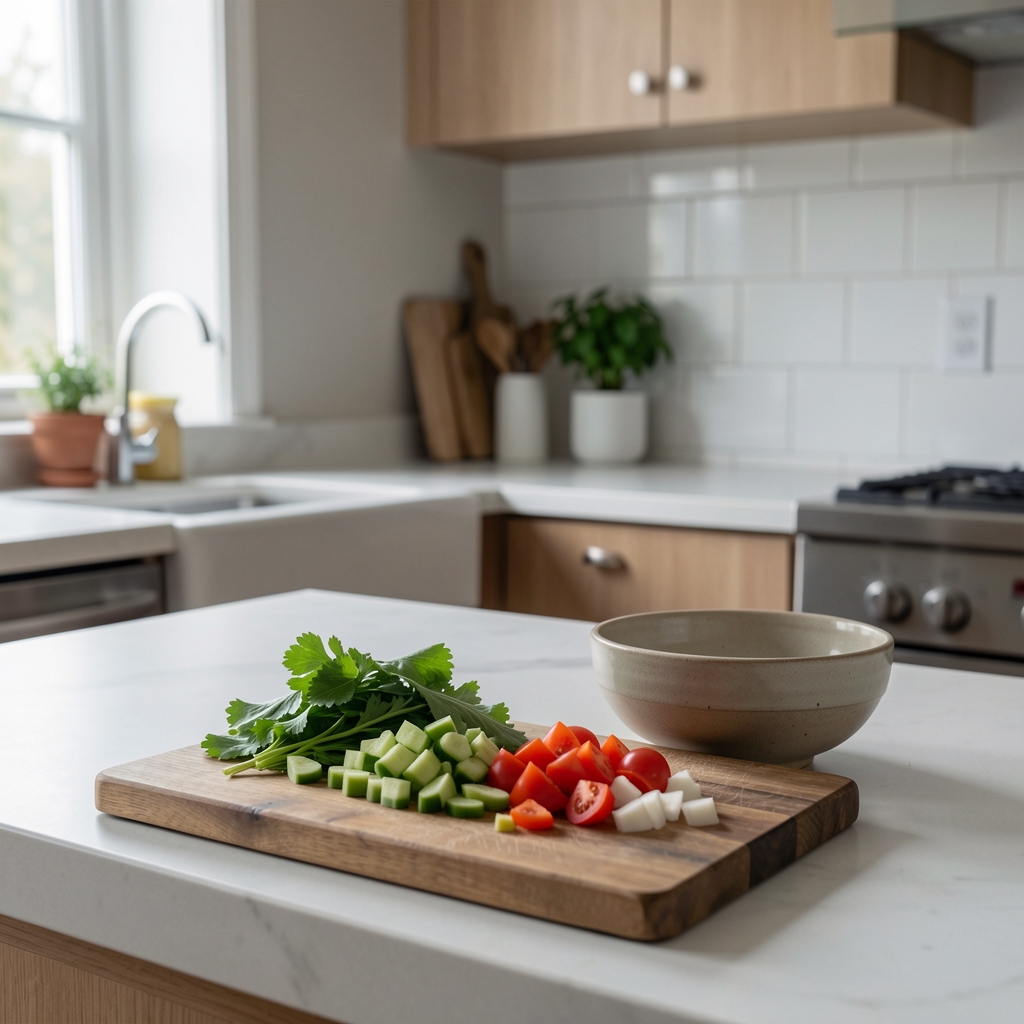
Fresh preparation at home. Kitchen counter, natural light.
Fibre-Rich Choices and the Structure of a Balanced Meal
Dietary fibre remains one of the more consistently supported topics in published nutrition research. Its presence in a meal influences the rate at which carbohydrates are absorbed, which in turn affects the experience of fullness and the steadiness of energy across the hours following the meal. Most whole foods — vegetables, legumes, whole grains, fruits — contain fibre as a structural component rather than an addition.
A fibre-rich diet, in practical terms, is simply one where whole foods form the majority of the plate rather than refined alternatives. Lentils, chickpeas, brown rice, oats, and the full range of vegetables all contribute without requiring supplementation or specialised food products. The UK dietary reference values suggest 30g of fibre per day for adults — a figure achievable through whole foods alone when meals are composed thoughtfully.
For those keeping a food journal, noting the presence of whole grains, legumes, and vegetables at each meal provides a simple qualitative measure of fibre diversity without requiring gram-level tracking.
- ■Seasonal produce selection naturally rotates the nutrient composition of the weekly menu without explicit planning.
- ■The visual plate method — half vegetables, quarter whole grains, quarter protein — provides a proportional framework applicable without measurement.
- ■Fibre-rich eating patterns are most consistently achieved through whole foods rather than supplementation.
- ■Home-cooked meals offer the most direct control over food ratios and portion composition.
Hydration as Part of the Daily Nutrition Pattern
Hydration habits often sit outside the scope of what people consider when thinking about balanced meals, yet fluid intake shapes digestion, the experience of hunger, and the body's use of water-soluble nutrients. The European Food Safety Authority's reference intake for water suggests approximately 2 litres per day for adult women and 2.5 litres for adult men, from all sources including food.
Vegetables and fruits contribute meaningfully to fluid intake — cucumber, tomatoes, celery, and melon are among the highest in water content. A plate rich in these foods therefore contributes to hydration beyond what the reader drinks explicitly. This interaction between food and fluid is one reason that whole-food dietary patterns tend to support hydration more effectively than patterns built around processed foods with lower water content.
Mindful Eating and the Pace of the Meal
Mindful eating, as an editorial subject, covers a specific set of behaviours: eating without concurrent screen use, chewing thoroughly, pausing between portions, and attending to signals of fullness before the meal is complete. These behaviours have been associated with more consistent calorie awareness and reduced post-meal discomfort across several observational studies.
The connection to the balanced plate is direct. A meal eaten slowly, with attention, allows the eater to respond to the plate's composition in real time. The experience of eating a fibre-rich, vegetable-heavy meal differs noticeably from the experience of eating a meal built around refined carbohydrates — and that difference becomes perceptible when the pace of eating allows it to register.
Nutritionist guidance in this area consistently emphasises the role of the meal environment — a table rather than a desk, a pause from devices, a considered portion rather than an automatic one. These environmental factors shape the eating experience in ways that influence both the quantity consumed and the quality of attention given to the food itself.